content
Most advice on SEO vs Google Ads was written using a map that no longer exists. It dates from a time when organic results took the bulk of clicks and ads skimmed a modest share off the top.
At Advantrise we run SEO services and paid search for Australian businesses. Most of the research on this shift comes from the US, but the mechanics behind it work the same way here.
So what changed? Similarweb compared the same US product searches in January 2025 and January 2026. Across the 4 categories it tracked, organic’s share of clicks fell by 11-23 points, while text ads gained 7-13 points. In 2 of those categories, ads and shopping listings together roughly doubled their share of clicks.
Why did that happen? An AI-generated answer now sits above the search results, and with it came a rise in searches that end without anyone clicking anything. People get what they need on the results page and go no further.
Did it hit both channels equally? Both lost out, in different ways. On informational searches with an AI answer, Seer measured organic click-through falling by 61% and paid click-through falling by 68%. The shift in share comes from somewhere else. Google has been giving ads more room on the page, so of the clicks that still happen, a larger portion lands on ads.
Over the past year fewer searches ended in a click at all, and of the clicks that remained, ads took a bigger share. Advice written before that describes a market that has moved on.
That gap is where the mistakes come from. A business owner reads an article from 2 years back, draws a conclusion about how to split the budget, and the conclusion was sound at the time it was written.
Below are 4 ways to get the split wrong, each shown on the kind of business where it breaks most often. First, a short look at how each channel works, and a comparison table.
How each channel works
What are you buying in each case? With ads you buy a spot on the page, with organic you build a position, and almost everything else follows from that difference.
Ads give you a spot straight away. Plenty of people still search the topic as SEO Adwords, because the platform was called Google AdWords until 2018. You pay for every click, the ad goes live the day you launch and disappears the day the budget runs out. The price of a click depends on what competitors will pay for the same spot. Lawyers, marketing agencies and tradies pay the most. Hospitality, beauty and online retail pay the least. Searches shaped like “service plus suburb” in the capital cities cost more than anything else, and Sydney is noticeably dearer than Adelaide.
Organic gives you a position nobody can switch off. It builds over months, costs the same however many clicks it brings, and once the work stops it fades gradually over several months.
Both channels share one results page, alongside the AI answer, the map pack and your competitors’ ads. That is why Google Ads management and organic work in 2026 come down to the same question. How much of that page ends up yours?
Which channel wins a given search depends on what the person is trying to do. Someone typing “what is a heat pump” is not buying anything yet, and a paid click on that search is money wasted. Someone typing “heat pump installer Geelong today” is ready to book, and that click is worth paying well for.
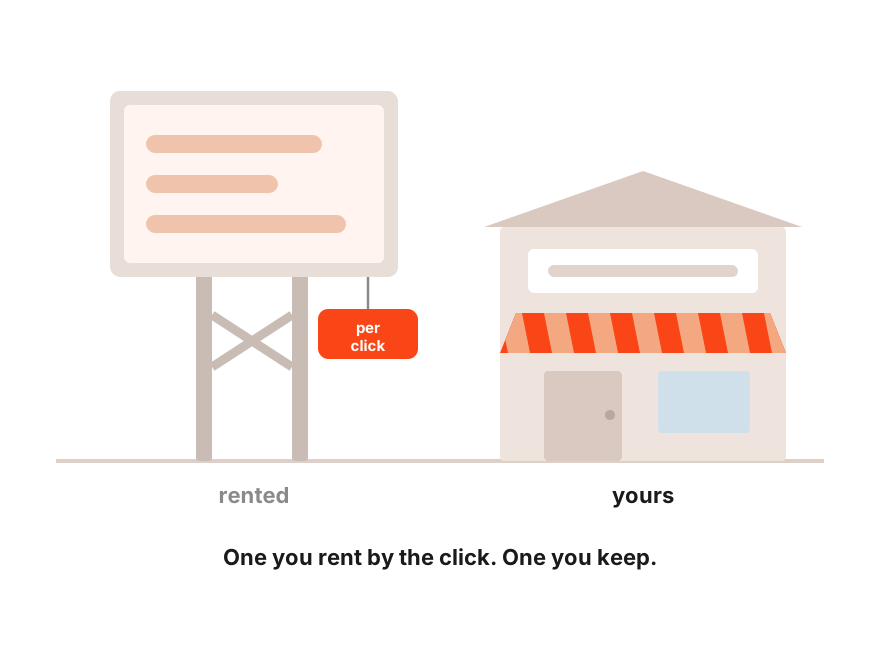
Ads rent a spot on the page, organic builds one. The rental works from day one and stops with the last payment, while the build takes months and stays yours.
The table worth seeing once
| Google Ads | SEO | |
|---|---|---|
| When results arrive | on launch day | from around 6 months |
| How cost works | per click, price stays flat | per month of work, cost per enquiry falls over time |
| What happens when you stop | enquiries stop the same day | rankings hold for several months |
| Resilience to changes on the page | high, the spot is paid for | moderate, depends on the algorithm |
| Audience trust | some people skip ads on purpose | higher, the position reads as earned |
| Control over volume | full, set by budget | indirect, depends on demand |
| What is left after a year | campaign data only | pages, links, rankings |
The google ads vs seo argument usually starts from whoever tried what most recently. The table shows why it has no winner. The 2 channels answer different questions. Ads tell you how many enquiries you will get this month. Organic tells you what each enquiry will cost you a year from now.
If you cannot say which of those 2 questions matters more to you right now, it is too early to pick a channel.
Mistake 1, everything into ads
This is the most common mistake, and over time the most expensive.
Why does it feel like the right call? Ads bring calls from day one, they show up clearly in a report, and they switch off with one button. Organic promises something vague in 6 months. At the start the choice looks obvious.
It breaks most often in local services, with plumbers, sparkies and other tradies. Take a business that has run its entire lead flow through ads for 3 years. It pays for every call, and that cost keeps climbing, because the price of a click in Australia went up by roughly 21% over the last year. The Google Business Profile is only partly filled in, the website has 3 pages, and there is no organic traffic at all. When the owner pauses the ads to ride out a slow patch, the phone goes completely silent.
After 3 years that business is paying more per customer than it did at the start, and it owns nothing apart from a history of campaigns.
What else sets the price of a click, besides competition? How well the page the ad points to matches the search. Google scores this through Quality Score, and 2 advertisers bidding for the same spot can pay amounts that differ several times over. The one with the better-prepared page pays less. So work on the website makes ads cheaper, even if you never touch organic as a separate project.
Ads bring in customers for as long as you pay. By year 3 the click costs more, there is no second source of leads, and the business depends entirely on one channel.
Mistake 2, everything into organic
This one mirrors the first, and it usually happens to people who have just read about how SEO compounds.
Who gets hurt most? New brands with no history. The domain is 6 months old, there are no links, the pages have only just been written. Ramping up from there takes longer than 6 months, and the first 2 quarters can pass without a single enquiry from search, while the rent still falls due every month.
The second group is seasonal businesses that started at the wrong moment. Australian seasons are sharp, and every industry has its own. Pool builders and air conditioning installers make their year over summer. Accountants and anyone working to the end of the financial year on 30 June make theirs in June. If your peak is December and the work began in September, organic will not get there in time, and the year closes in the red because of how the channel works.
Organic cannot deliver on demand, and cash flow will not wait for it. That is why the ramp-up period is worth funding with ads. In that role ads act as a bridge, holding the lead flow steady while organic comes up to speed and scaling back once organic enquiries start arriving.
Organic takes a while to get going, so the first months need another source of customers. Ads cover that gap and gradually step aside.
Mistake 3, both channels on the same searches
Of the 4 it is the hardest to spot, because from the outside it looks like the right decision.
What does it look like in practice? A business runs both ads and SEO. The ads are set up on the same searches where the site already ranks at the top organically. On paper both channels are working. In reality you are paying for clicks you would have got for free, and competing against yourself for the same person.
It shows up most in online stores. The site ranks reliably at the top for the brand names it stocks, and the ads run on those exact same names. Some of those clicks really would go to a competitor if you paused the ads, so paying for them makes sense. The rest you bought back from your own organic listing, and in the report those clicks look just as good as the first lot.
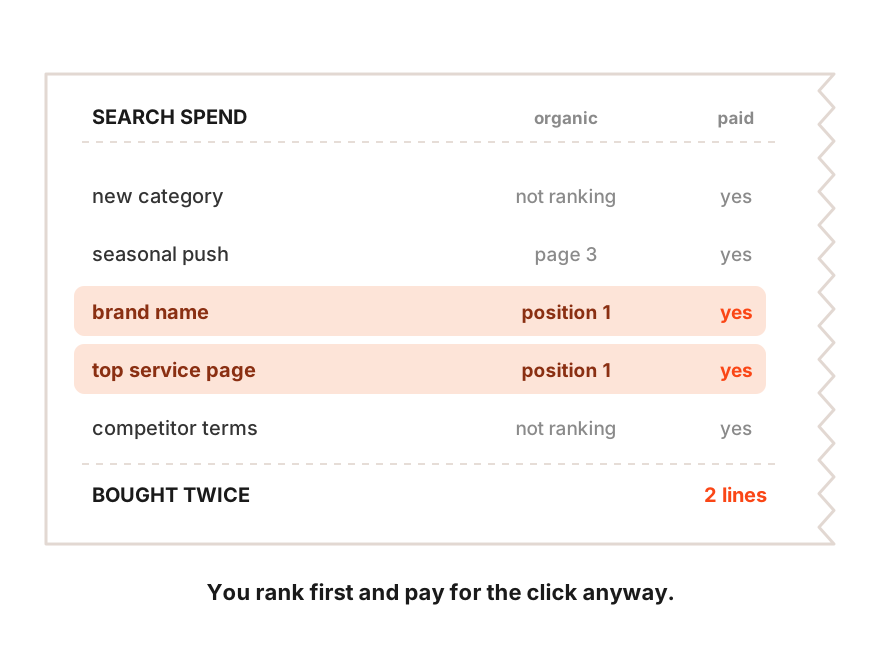
How should the split work instead? Ads take on whatever organic has not reached yet or cannot keep up with, such as new categories, seasonal peaks, short promotions and expensive commercial searches you do not rank for. Organic holds what it has already won and everything that brings traffic month after month.
How do you check whether you are paying twice? Take the search terms report from your ads and set it against your organic rankings. Every search where you sit in the top 3 organically and still pay for the click needs its own decision, rather than rolling over automatically with the campaign.
If you already rank first organically for a search, ads on that search often buy clicks you would have received anyway. Those searches deserve a separate look.
Mistake 4, borrowing someone else’s answer
It shows up most in B2B, where sales cycles run long.
Where does this one come from? An owner asks a mate who runs a dental practice, and hears that ads work. In dentistry they genuinely do, because a patient often decides quickly. With industrial equipment, the decision takes 6 months and involves several people.
Over a long cycle the buyer has time to read a dozen pieces, compare suppliers, take the proposal to management and come back a month later. An ad catches them at the moment of one search, but does not stay with them for those 6 months. Organic and content do, which is why B2B budgets usually lean towards organic, with ads kept on narrow commercial searches.
How does this play out across different businesses? A local service with emergency searches lives mostly on ads in year 1, then gradually shifts weight into the Google Business Profile and local organic. An online store runs both channels all the time and splits them by product category. B2B with a long cycle starts with content and keeps ads on commercial searches. A new brand with no history starts with ads, because there is no other way to win the first customer.
What worked in someone else’s business may not work in yours. The biggest factor in choosing a channel is how long your customer takes to decide.
When to choose which
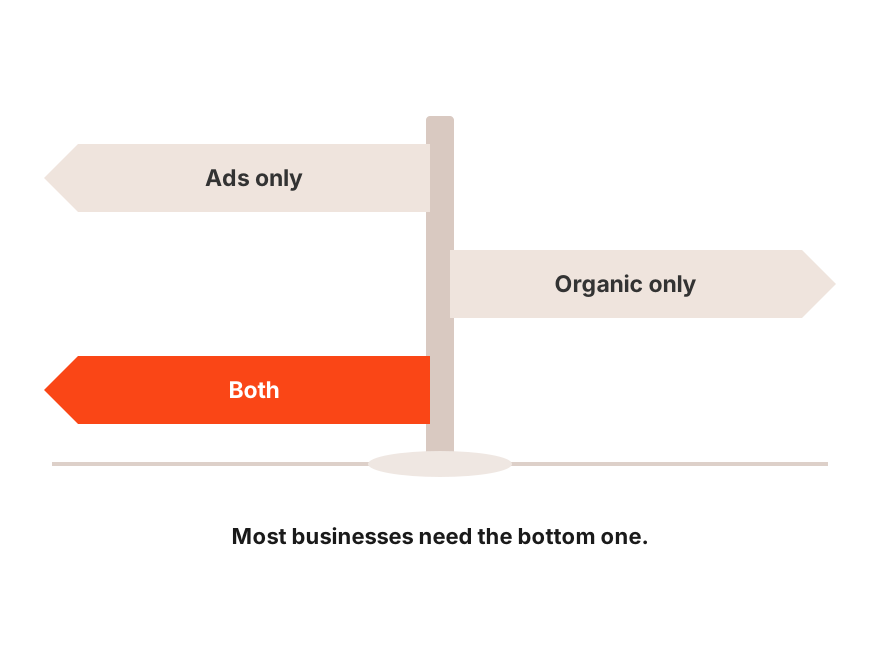
Ads only. This fits a business that needs the money this quarter, where cash flow will not survive 6 months of organic ramp-up. It also suits testing a new product before you know whether demand exists, and any offer tied to a date, like a sale or a seasonal campaign. A new domain belongs here too, because in the first months organic will not bring in enough to cover the rent.
Organic only. Some niches price clicks so high that ads never pay back at any conversion rate, and organic is the only channel that adds up. Long decision cycles point the same way, since a customer may come back several times over 2 months while an ad only catches the first visit. It also makes sense once the business has a steady flow of customers and the goal shifts to bringing down the cost of each one.
Both channels. Running both makes sense if there are commercial searches you do not rank for yet and waiting 6 months is not an option. A sharp seasonal peak that organic cannot serve in time is another reason. So is a business with several lines, where organic has already won some and has not reached others.
For that last case there is now a separate argument. On searches where a brand was cited in the AI answer, Seer found about 35% higher organic click-through and 91% higher paid click-through than on the same searches where it was not. Seer notes the link may run both ways, since stronger brands are more likely to be cited in the first place. Either way, showing up in the AI answer and in the ads together consistently went with better results on both.
Businesses that appear in AI answers tend to get more from their ads as well. Organic visibility and paid results now move together more closely than they used to.
SEO vs Google Ads FAQ
Which should I choose if the budget only covers one channel?
Work from when you need the money. If you need customers this quarter, go with ads. If you can fund 6 months of ramp-up from elsewhere and want a lower cost per enquiry down the track, go with organic.
Can I switch off ads once organic starts working?
You can, but it is better to scale back gradually and watch total enquiries rather than each channel on its own. Organic will genuinely pick up some of the paid clicks, and some it will not.
Why do ads get more expensive every year?
More advertisers are bidding on searches that are not growing. In Australia the price of a click rose by roughly 21% over the past year while search demand fell.
Do ads affect organic rankings?
No. Google does not factor ad spend into organic rankings. Where the channels overlap is on the website itself, because improving your pages lifts both organic rankings and the Quality Score of your ads.
How long should I run both channels?
Until organic covers most of your commercial searches. After that, ads usually stay on for seasonal peaks, new categories and searches where you do not rank at the top.
Where to start with the split
Read back over the 4 mistakes and see which one describes your business. Usually 1 fits, occasionally 2.
After that you need 3 numbers. What you currently pay per enquiry from ads, which searches you already rank at the top for organically, and what share of your paid clicks lands on exactly those searches. That last number usually comes as a surprise, because hardly anyone puts those 2 reports side by side.
At Advantrise we start with a free audit that works out those 3 numbers. It shows where the budget is paying twice for the same thing, and the decision after that is yours.
Subscribe to our newsletter