content
Why does a plumber who lists twenty suburbs in the profile only get calls from three of them? It is the most common question we hear about SEO for tradies, and the answer explains most of what goes wrong in this market.
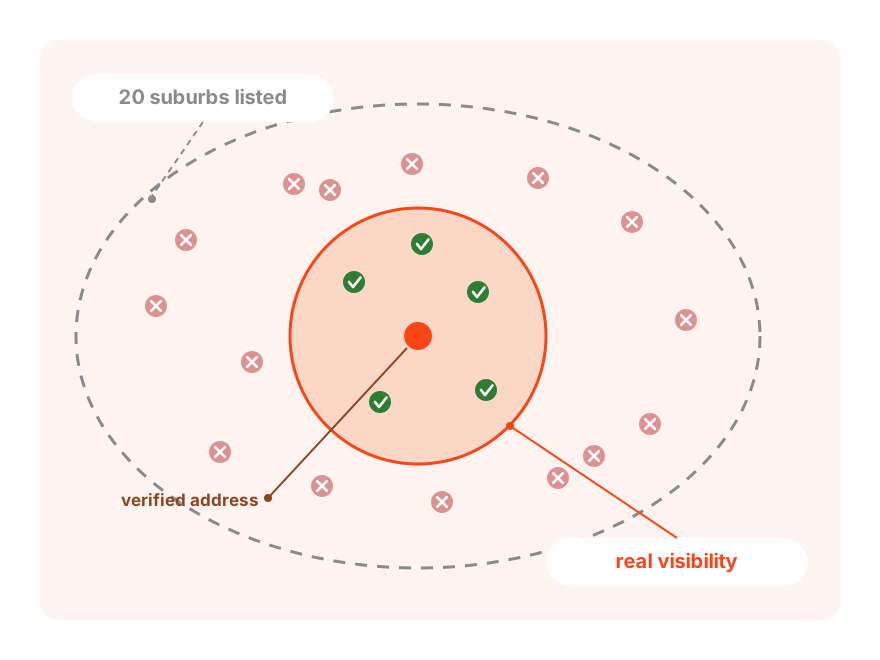
Spoiler: the list of suburbs in your profile does not affect rankings at all. Google measures distance from your real address, even when you have hidden it from view. Twenty service areas draw an outline on the map and do nothing else.
The rest of this article covers what actually decides visibility, and why most tradie advice describes the wrong mechanism.
First, the scale of the problem. In ServiceTitan’s 2025 survey of 1,025 Australian tradies, seventy per cent still rely mainly on word of mouth. Seventeen per cent do SEO at all.
Bad news for the trade, good news for you. Competition for organic visibility here is far lower than in most industries.
This article is for the tradie who already has a Google profile, maybe even a website, and still gets almost no calls from search. At Advantrise we run SEO services for local businesses, and what follows is the mechanism step by step, from profile to phone call.
Where tradie jobs are actually won
Search on a phone looks different from what most people picture. When someone types “electrician near me” at seven in the morning with a tripped switchboard, they see three layers, and the organic one comes third.
The first layer is Local Services Ads. You pay per lead rather than per click, and a Google Guaranteed badge sits next to the business name.
Local Services Ads are a separate ad format for service businesses. They appear above standard search ads and above the map, charge per enquiry rather than per click, and require verification of licence, insurance and the owner. In Australia they are open to plumbers, electricians, locksmiths and a handful of other categories, with a cost per lead running roughly twenty to sixty dollars AUD.
Three details separate LSAs that work from LSAs that drain money. The budget is weekly, not daily. Every service left switched on can generate a charged lead, so anything you do not actually do gets turned off. And responsiveness feeds the ranking, so unanswered calls push your ad down over time.
The second layer is the map pack, three businesses with ratings and a map. This is where profile work pays off, and where most tradie calls come from. The third layer is ordinary organic results, reached after scrolling past both.
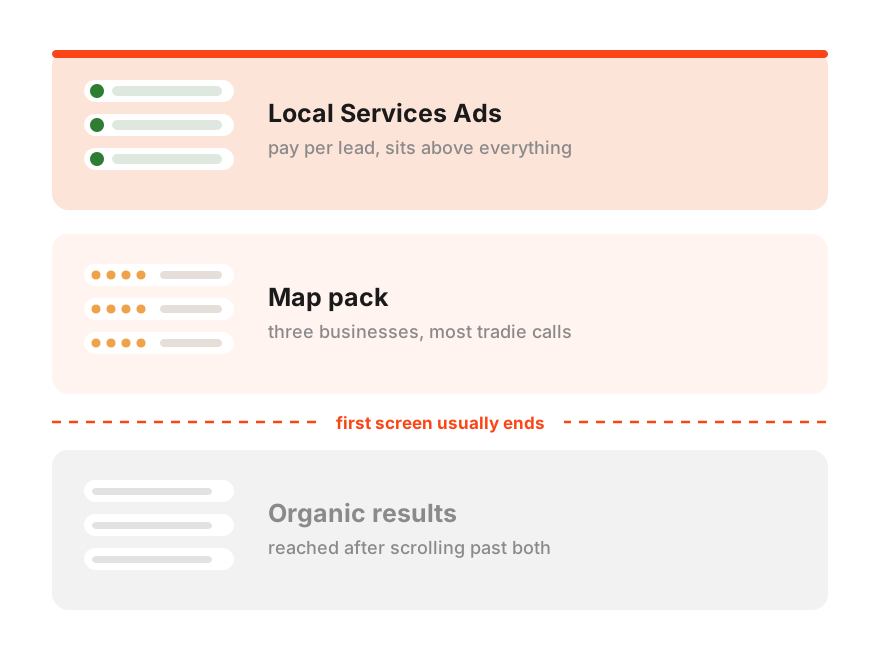
The planning conclusion is straightforward. A tradie website matters, but on its own it does not win mobile search. The profile wins it, with the website holding it up.
Your Google Business Profile is the base
Most tradies work out of a ute rather than premises customers visit. Google treats that as its own business type with its own rules.
A service area business travels to the customer instead of receiving them. That profile is required to hide its physical address and instead lists the areas it serves, up to twenty. Displaying a home address on this kind of profile is a common reason for suspension.
The setup order below is deliberate.
Business type and hidden address first. Then the primary category, which is the strongest lever inside the whole profile. It should be the narrowest category that accurately describes your work rather than the broadest. Then additional categories for the rest of what you do. Then services, hours, and a phone number somebody actually answers.
Verification catches people out. Video verification is now the default for new listings in most regions, and it wants one continuous take showing signage, your vehicle and a live action proving you run the business. Plan it before you start filming.
One temptation is worth resisting. Padding the business name with keywords, turning Smith Plumbing into Smith Plumbing Emergency Plumber Melbourne, does move rankings, and Whitespark’s survey puts business name keywords third among individual local pack factors. It also breaks Google’s guidelines directly, and the usual outcome is that the extra words get stripped, occasionally along with the profile. The name should match the one on your ute and your invoices.
Something else that saves time. Profile posts are not a ranking signal, they move clicks. If an hour a week goes into a post while services, photos and hours sit untouched for months, that hour is in the wrong place. Local SEO services start with sorting out the profile, not with a content calendar.
Why twenty suburbs is not twenty suburbs
Back to the question from the top, because this is where intuition fails almost everyone.
Google builds local results from three things.
Relevance is how well your profile matches the query. Distance is how close you are to the person searching. Prominence is how well known your business is, which is where reviews, mentions and site authority do their work.
The trap sits in the second one. Distance is measured from your verified address, the same one you hid from visitors. Google can see it and uses it. Service areas have no effect on that calculation whatsoever. They draw an outline on the map.
So a plumber based on the edge of town who typed in twenty inner suburbs will not appear in those inner suburbs. Real visibility runs a few kilometres around your base, and no list stretches it.
City shape changes how much this hurts. In a sprawling, isolated market, SEO in Perth plays out differently from the same work in dense inner Sydney, because competing profiles sit further apart and each one holds a wider radius by default.
So what do you do, assuming you are not moving house?
You build prominence, the third factor. Reviews, mentions of the business on local sites, and separate pages for the areas you serve. Not one page saying you cover all of Sydney, but a page per area with real content, jobs you have done there and the streets around it.
Those pages do not beat the distance factor in the map pack. They win the organic results for “type of work plus suburb”, the second largest channel after the map.
Local keywords by type of work
Tradie queries split into two groups that behave differently, and confusing them is expensive.
Emergency. “Emergency plumber”, “24 hour electrician”, “burst pipe”. The person is stressed, the decision takes minutes, and it turns on proximity and whether somebody picked up. Profile, hours and phone carry this.
Planned. “Bathroom renovation”, “switchboard upgrade”, “deck builder”. The decision runs from days to weeks while the person compares and reads reviews. Website and content carry this.
Page structure comes from multiplying two lists. Type of work by area, and only the combinations with demand where you genuinely work.
One mistake shows up more than any other. A tradie builds a single Services page listing everything from carpentry to fit-outs and expects to rank for each line. One page carries one main query, and related terms follow it.
SEO for plumbers
Plumbing has the highest share of emergency queries of any trade, so response speed outweighs everything else.
For a solo plumber the order runs like this. Profile, the Plumber category, hours that reflect real after-hours availability if you take night calls. Then pages for your most valuable jobs rather than your most frequent ones. Drain clearing brings volume, hot water replacement brings money.
A note on round-the-clock hours. If your profile says 24/7 and nobody answers at night, it hurts twice. The customer calls a competitor, and Google logs the unreliability and shows you less in local search.
SEO for plumbing companies
With crews on the road the picture changes. Separate pages per area start paying off, commercial work deserves its own section away from domestic, and LSAs make sense as an extra channel because a per-lead price is predictable and scales.
Multi-crew operators ask about running several profiles. Google allows it under conditions that catch most people out. Each location needs its own dedicated staff, its own licence for that locality, and service areas that do not overlap with the other listings. Two profiles for the same crew covering the same suburbs are the fastest route to a suspension.
SEO for electricians
Electrical work sits differently. Fewer emergency queries than plumbing, more planned and regulatory ones, from switchboard upgrades to pre-sale safety checks.
That shifts the emphasis. Licence and insurance move to the front, because customers check them before dialling. The Google Guaranteed badge does more conversion work for an electrician than for most other trades.
Your profile category should be narrower than plain Electrician if you specialise. Solar, data cabling and industrial work are separate categories with different competition levels, and choosing the accurate narrow one moves visibility further than most edits available to you.
A dedicated guide to electrical work is on the way, with the query research and site structure in full.
SEO for construction companies
Construction carries the longest decision cycle of any trade, and everything follows from that.
The map pack matters less. Someone planning a two hundred thousand dollar extension does not pick from three businesses on a map in two minutes. They search for weeks, compare and look at finished work.
Weight moves to the website. Project portfolios with photos of each stage, pages for types of build, a plain description of process and timelines. Reviews work differently too, where a detailed paragraph counts for more than a five star rating with no words.
The queries change as well. Instead of “near me” you get “cost”, “how long” and “permit”. These are informational searches ahead of a commercial decision, and content aimed at them reaches a builder’s future client long before contractors get compared.
Reviews and photos of the work
Reviews are not profile decoration for a tradie. They are part of the third ranking factor, the prominence one from earlier.
The number everyone watches is the wrong one. Review velocity beats review count. A steady flow across three months outperforms fifty reviews in a week followed by silence.
A practice that costs nothing. Ask for the review as you finish the job, while the customer is happy and you are still standing there. Not in an email next week. And reply to every one, negative included, because replies are read by the next customer rather than the one who wrote it. Most people expect that reply within a few days, so one sitting untouched for a month reads as neglect.
Before/after photos work differently from what people assume. They barely move rankings. What they decide is whether someone taps the call button after seeing you in the results. Real photos from a real job, not stock images, are the cheapest conversion tool available to you.
A word on third-party platforms. Hipages and similar services do supply leads, and they also put you in a queue with five competitors for the same job, where the lowest price usually wins. Visibility you own does not create that queue.
Mobile search and click to call
Almost all tradie search happens on a phone, which changes what the site has to do.
The phone number needs to be tappable and in the header, not only in the footer or on a contact page. A reader should reach you in one tap without copying digits.
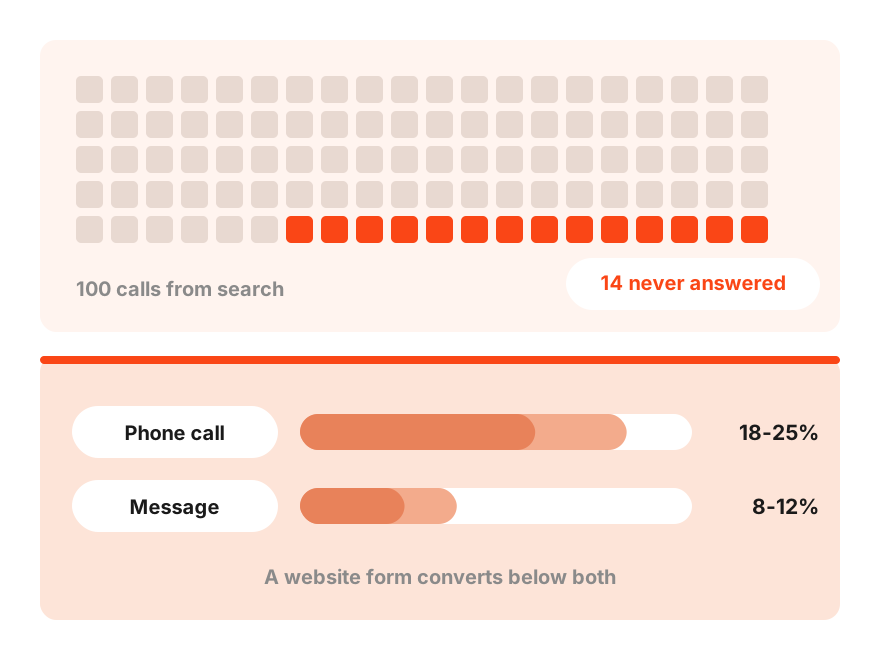
The gap between contact methods is wide. Local Services Ads data puts calls at roughly double the conversion of messages, eighteen to twenty-five per cent against eight to twelve. A website form loses to both.
And the most expensive detail of all. Around fourteen per cent of calls in home services go unanswered. Meanwhile, response time research consistently finds that seventy-eight per cent of customers hire whoever replies first.
Run that against your own numbers. If search brings a hundred calls a month, fourteen of them go to competitors purely because nobody picked up. No amount of optimisation fixes that. It is an operations problem wearing a marketing costume.
Doing it yourself, and when not to
A fair part of this work needs nobody outside your business and takes a couple of weekends.
Setting the profile up as a service area business, hiding the address, choosing the accurate category, filling in services and hours. Uploading real job photos. Asking for reviews and replying to them. A tappable phone number on the site. Checking that your name, address and phone read identically everywhere you are listed.
That covers most of the baseline, and in a calm local market it can be enough. In a smaller and more price-sensitive market, SEO in Adelaide is the sort of job a solo operator with a tidy profile and a few service pages can still carry alone.
Then comes the part where doing it yourself goes badly. Site structure across dozens of work and area combinations. The technical side, speed and mobile behaviour. External links and mentions. Analytics that shows which queries produce calls rather than traffic.
Some situations call for an agency immediately. A dense Sydney or Melbourne market, several crews across several areas, or a competitor who has been investing in search for years.
On the paid side, Google Ads for tradies and LSAs both deliver calls from day one, while SEO delivers later and without paying for each click. Tradie digital marketing that holds up over time usually runs both, paid covering today while organic accumulates for tomorrow.
SEO for tradies FAQ
How long before search brings calls?
A Google profile can produce calls within weeks if it was half-filled and then sorted out properly. Organic visibility for the website accumulates more slowly, six to twelve months as a working expectation. Emergency niches respond faster than planned ones.
Do I need a website if I have a Google profile?
The profile wins you the map pack. The website wins everything else. Without one you will not appear for “type of work plus suburb” searches, you cannot show a portfolio, and the profile itself ranks worse when no page backs up what you do.
What brings more jobs, SEO or ads?
Different speeds. Ads and LSAs work from day one and stop when the budget stops. SEO starts slower and then delivers calls you are not paying for each time. Most growing trade businesses run both at once.
How many reviews do I need for the map pack?
There is no fixed number, though the working benchmark across most Australian metro suburbs is fifteen or more recent reviews with owner replies. Velocity matters more than volume, so a steady flow beats a one-off push.
Can I just add more suburbs to my profile?
No. Service areas do not affect rankings, and distance is measured from your hidden address. A longer list does not widen visibility. Reviews, mentions and dedicated area pages do.
What to do with this
Tradie jobs are won in the first two screens of a phone search, and getting there depends on things that cost almost nothing. The right profile type, a narrower category, fresh reviews, real photos and a phone somebody answers.
The expensive mistake is not a missing budget. It is believing that a list of suburbs replaces the work of building prominence.
At Advantrise we start with a free audit showing which queries you appear for now, which ones the competitor down the road appears for, and which gaps you can close yourself. No obligation and no sales pressure, and you decide from there whether you need us at all.
Subscribe to our newsletter