
content
Sooner or later every meter box in an Australian suburb collects a sticker. A name, a number, sometimes a faded logo. Whoever’s sticker is sitting there gets the next call almost automatically, because nobody has to go looking for them.
The catch is that only one kind of customer ever sees that sticker. The one who has already had you out.
Everyone else, and that is most of your future income, is looking at a phone. There is no sticker there. SEO for electricians is that sticker again, built for the people who do not know you yet. What they find instead is a Google Business Profile filled in halfway and a website nobody has touched in years.
Look at search that way and it becomes obvious that customers arrive down two different roads. One is fast and panicky, the switchboard trips at six in the morning and the decision takes four minutes. The other is slow, where someone spends three weeks planning a kitchen rebuild, collects three quotes and compares photos of finished jobs. Same electrician, same suburb, two different behaviours, and two different things decide the outcome.
Most electricians build their entire presence for the first road. Profile filled in, the word emergency in the business name, hours set to 24/7. Meanwhile the second customer, whose job is worth many times more, walks straight past, because there was nothing there to look at.
What follows covers both roads separately: how to set the profile up, which queries to collect, what to do about reviews, what belongs on the website, and where enquiries usually leak away. At Advantrise we run professional SEO services for local businesses, and most advice about SEO for tradies treats every trade the same way. Electricians are where that falls apart.
Emergency and planned, two different searches
An emergency search is quick and has almost no memory. Nobody compares, nobody reads, nobody remembers the name afterwards. They look at who is close, who is open and who has a decent rating. The profile wins that one, not the website.
A planned search is the opposite in every detail. Someone opens a handful of tabs and leaves them sitting for days, comes back to them in the evening, shows their partner, googles the company name separately to see what turns up elsewhere. They compare photos of finished work, read how the pricing gets explained, and notice whether there is anything to read at all. The profile is still the way in, but the decision forms on the website. An electrician whose site was built once and never touched again loses this half of the demand before anybody has spoken to him.
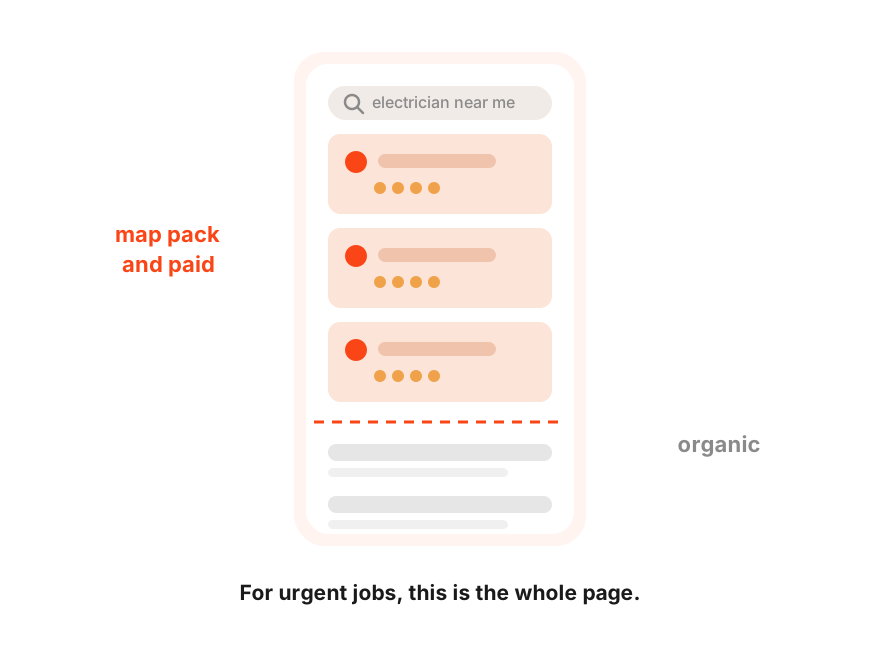
The local pack is the block of three businesses and a map above the organic results. For emergency queries most people never scroll past it, so for urgent work it is effectively the entire results page.
Here is the part that gets missed. Electricians carry a larger share of planned work than most neighbouring trades. Switchboard upgrades, lighting after a renovation, points for a new air conditioner, solar, an EV charger, a safety check before a house sells. A good deal of it comes with paperwork attached, so people search well in advance and read carefully.
The comparison with the trade next door makes the difference obvious. When we plan SEO for plumbing companies, most of the effort goes to the emergency side, because a burst pipe settles everything. For an electrician the proportion runs the other way, and copying somebody else’s plan means missing exactly the jobs that pay best.
Setting up the Google Business Profile
Your profile is still the base, and it usually gets filled in as though every job were an emergency.
Your primary category should be the narrowest one that still describes your work accurately, and it is the strongest lever anywhere inside the profile. Plain Electrician is a broad category with the heaviest competition, where you stand alongside everyone who holds a licence. If half your work is solar, data cabling or industrial, separate categories exist for those, and the field there is far thinner. Choosing a narrower category looks like giving something up, and it does the opposite.
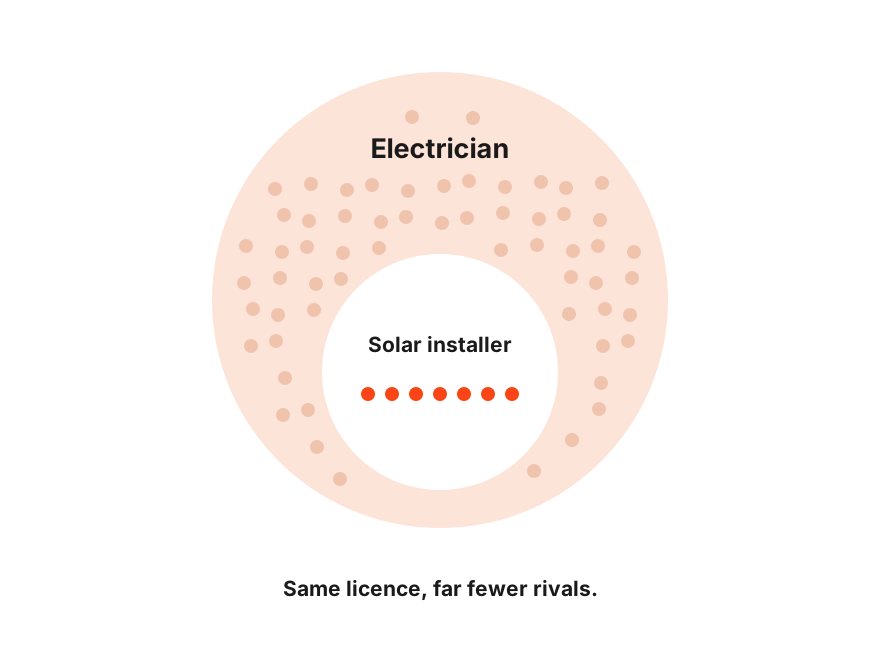
You become visible for the searches where you actually have an edge, and you stop disappearing in the ones where you never had one.
Hide the address if you travel to the customer, and list service areas instead. A home address left on display in that kind of profile is a common reason for suspension.
Licence and insurance carry more weight here than in the other trades. Customers check them before they dial, because the cost of getting electrical work wrong is higher than a leak. Anything that proves your qualifications belongs in the profile, not buried on the website.
Hours have to match reality. If the profile says 24/7 and nobody picks up at two in the morning, it hurts twice over. The customer rings the next name down, and Google logs the unreliability.
Fill in services completely, with descriptions. This is the part of the profile Google matches against the wording of a query, and it is the part most often left empty.
Keywords by type of work and suburb
The whole keyword map in SEO for electricians comes from multiplying two lists. Type of work by suburb.
Types break down roughly like this. Emergency, where the clock is running. Repairs, where something works badly but still works. Upgrades, from a switchboard through to a full rewire. New equipment, covering solar, batteries, EV chargers and smart home gear. Inspections and safety checks before a sale or a rental.
Suburbs are not taken wholesale, only the ones you genuinely service and will drive to without adding a travel charge.
One mistake repeats more than any other. An electrician builds a single Services page listing everything he can do and waits for rankings on every line of it. That is not how it works. One page carries one main query, and related terms follow behind it.
The second point is about priority. Frequency and value rarely line up.
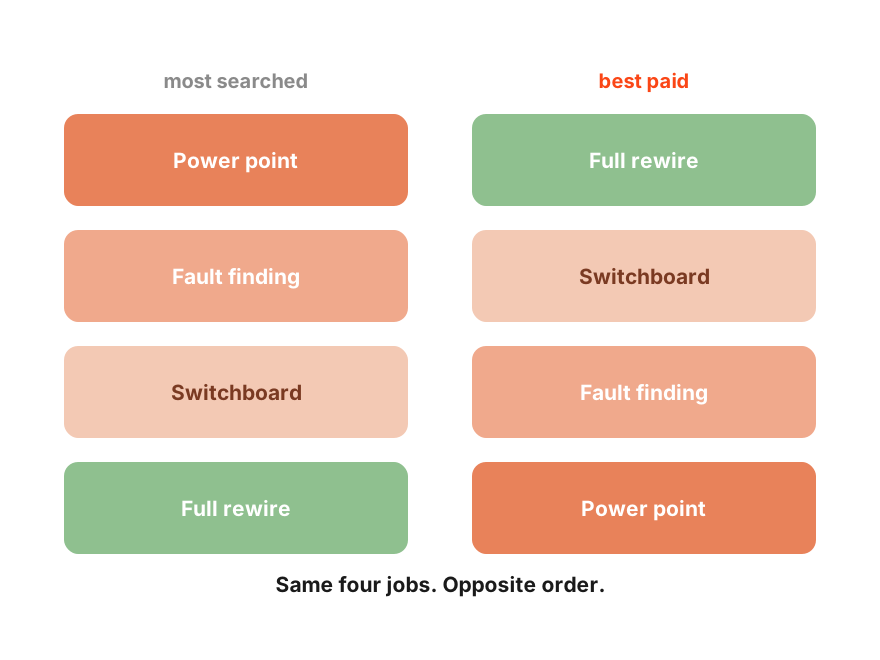
Replacing a power point brings volume, a full rewire brings money. Build pages in the order of what the work is worth, not in the order of search volume.
The local layer goes on separately. Local SEO for an electrician means suburbs before cities. Australians search by the name of their own suburb, and a page built around a capital loses to a page built around the streets you actually work in.
Reviews carry extra weight here
A review does a second job for an electrician. It does not only confirm the work was good, it settles a worry, because the subject is the safety of somebody’s house.
Watch the steadiness rather than the total. A regular flow across a quarter beats thirty reviews in one week followed by six months of silence.
Ask on site, with the job just finished and the customer looking at the result. An email the following week does a fraction as much, because the feeling has worn off and the whole thing has already turned into routine. This is also where careful businesses trip up. You can ask everyone, you cannot filter for the happy ones, and the setup where you ask how it went first and only send the pleased customers on to Google breaks the guidelines and gets penalised. It also shows up more easily than people expect.
Reply to every one of them, negative included. The reply is read by the next customer, not by the person who wrote it.
What an electrician’s website needs
A website closes the planned search, the one that brings the expensive jobs. The minimum it has to carry looks like this.
Structure matters more than design. A separate page for every meaningful type of work rather than one combined list, and separate pages for the suburbs you service with real content in them, not a template with the suburb name swapped out. Alongside that, photos of jobs you have actually done, your own rather than stock. Before and after on a switchboard works particularly well for electrical work, because the difference is visible even to somebody who knows nothing about wiring, and it is usually what stops someone idly flicking through tabs.
Then comes everything that removes doubt. Proof of qualifications somewhere visible rather than down in the footer, meaning licence, insurance and industry memberships. A tappable phone number in the header rather than only on a contact page, because nearly all of this search happens on a phone and the customer should reach you in one tap. And some transparency about price, which does not require publishing a rate card, only an explanation of what the cost depends on and what a call-out covers.
And speed. A page that loads slowly on a phone loses the emergency customer completely. He goes back to the results and taps the next name.
Mistakes that cost you enquiries
The most expensive missteps in SEO for electricians repeat year after year.
The commonest and costliest is the imbalance. The whole presence is built for emergency queries while planned work has no page at all, even though planned work pays for most of the year.
Then comes a cluster of profile mistakes, all of which look like an attempt to do better. Keywords stuffed into the business name do move rankings, and they break Google’s guidelines outright, so the extra words usually get stripped, sometimes along with the profile. A category gets chosen broadly on the theory of covering everything, and the effect runs backwards and narrows the reach. And an old listing from a previous business name sits there unclaimed, quietly competing with the current one for the same searches.
Website mistakes are different. Suburb pages built by copying and swapping the name get recognised as a template, and instead of visibility the site collects thin content. Leaning on third-party platforms does produce enquiries, and it also puts you in a queue with several competitors for the same job, where the lowest price generally wins.
And the last one, the quietest. Nobody checks which queries actually produce phone calls. Without that the budget gets spread at random, and half the work goes to searches nobody rings from.
SEO for electricians FAQ
How long does SEO for electricians take to work?
A profile can shift within weeks if it was half-filled and then sorted out properly. Site positions for planned queries build more slowly, six months to a year depending on how crowded your suburbs are.
Do I need a website if I have a Google profile?
For emergency work the profile can carry you. For planned work it cannot, because the customer wants to compare, and there is nothing to compare inside a map listing.
What works faster, ads or SEO?
Ads bring calls from day one and stop the moment the budget does. SEO starts slower and then brings enquiries you are not paying for each time. Most electricians who are growing run both.
How many suburbs should I list?
As many as you genuinely service without adding a travel charge. A longer list does not widen your visibility, because visibility is measured from your real address rather than from the list itself.
Do photos affect rankings?
Barely, if at all. What they affect is whether somebody taps call after seeing you in the results. For planned jobs that is the deciding factor.
Where to start tomorrow
The sticker on the meter box only works for people who already know you. Everything above is for the rest of them, and there is no need to begin with the hardest part.
The shortest route runs like this. Narrow the category in your profile, fill in the services, bring the hours back to reality. Then build a page each for the two or three most valuable types of work. Then set up review collection so that it does not depend on you remembering.
That is a couple of weekends and no budget, and in a quiet market it can be enough.
At Advantrise we start with a free audit showing which searches you appear for now, which ones the electrician down the road appears for, and how much of the gap you could close yourself. No obligation, and you decide from there.
Subscribe to our newsletter